
How Far is Dallas TX to Arlington TX? Dallas, TX is about 20–22 miles from Arlington, TX by car, depending on your starting point, and the drive usually takes around 25–35 minutes via I-30 in normal traffic. During rush hour, game days, or major events, the commute can take 45 minutes or more.
For homebuyers, that short distance is one of Arlington’s biggest advantages. You can stay close to Dallas jobs, restaurants, entertainment, and business districts while exploring Arlington neighborhoods that may offer more space, a strong community feel, and a central location within the Dallas-Fort Worth Metroplex. The town is adjacent to Kennedale, Grand Prairie, Mansfield, and Fort Worth, surrounding the smaller cities of Dalworthington Gardens and Pantego.
In this guide, we’ll cover the Dallas-to-Arlington distance, typical drive times, commute factors, the best Arlington-area neighborhoods for buyers, and what to consider before choosing your future home between these two North Texas cities.
| Question | Answer |
|---|---|
| Driving distance | About 20–22 miles |
| Straight-line distance | About 18 miles |
| Typical drive time | 25–35 minutes |
| Rush hour / event traffic | 45+ minutes |
| Main route | I-30 |
| Best for homebuyers? | Yes, especially buyers who want Dallas access with Arlington-area lifestyle options |
Top Dallas-Arlington Neighborhoods for Buying a Home
The corridor linking Dallas and Arlington showcases a variety of neighborhoods. Each provides its distinct mix of amenities, lifestyle, and community vibe.
Whether you are looking for a lively city environment, a peaceful suburban escape, or anything in between, it offers choices to meet almost every taste.
Here, we will discuss the top neighborhoods that stand out to homebuyers seeking a balance of comfort and convenience.
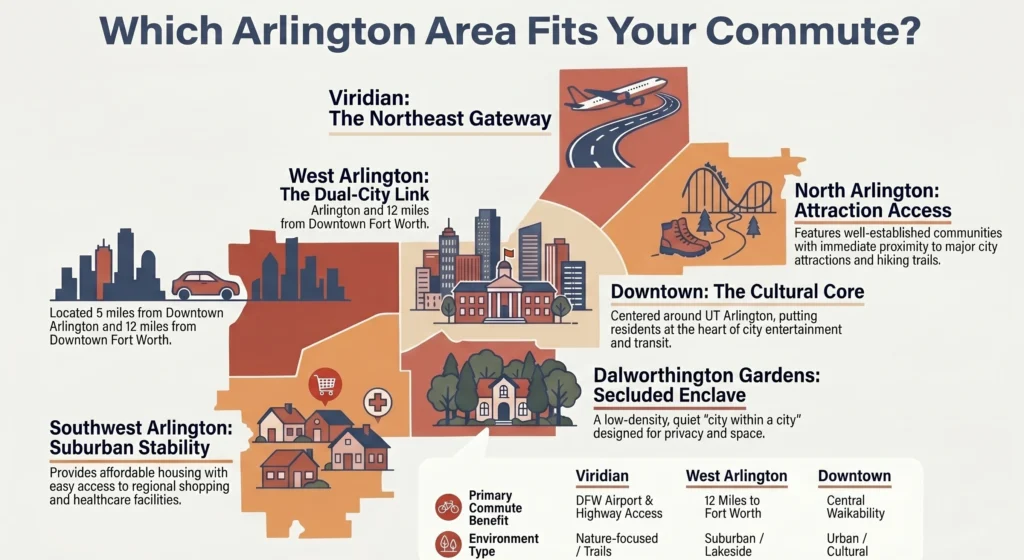
Types of Homes Available Between Dallas & Arlington
Homebuyers in the Dallas–Arlington corridor will find a wide selection of properties that cater to a variety of lifestyles and budgets.
From modern townhomes and spacious single-family houses to low-maintenance condos and new construction developments, this area offers something for everyone.
Here, we will discuss an overview of the different types of homes available, helping you identify the best fit for your needs and preferences.
Single-Family Homes
Single-family homes are the foundation of the housing market in the area between Dallas and Arlington. These homes feature three to six bedrooms, ensuring plenty of space for expanding families.
It even features multi-generational units or individuals who need space for home offices and guest rooms.
The neighborhoods have neatly kept lawns, established greenery, and tranquil, tree-shaded avenues. You can select from a variety of architectural styles, including classic ranch and traditional designs, as well as newer, modern constructions.
Custom Estates & Luxury Homes
The area features a variety of custom-designed estates and luxurious residences. It is ideal for individuals seeking high-end family living. These residences include spacious layouts, high-end finishes, chef-inspired kitchens, lavish bathrooms, and remarkable outdoor areas.
Situated in high-end areas or on larger lots, these residences offer greater privacy, safety, and unique features.
Master-Planned Communities
Carefully designed communities attract buyers looking for a comprehensive neighborhood environment.
These communities offer a range of home designs and sizes, complemented by communal features such as clubhouses, swimming pools, walking paths, playgrounds, and gyms.
You can enjoy integrated community planning, shared spaces, and a timetable of local activities, fostering a strong sense of togetherness and ease.
Common Home Amenities
Homes in the Dallas–Arlington corridor are known for their remarkable features, irrespective of dimensions or cost. The home amenities include open-plan living areas and contemporary kitchens.
These properties feature outdoor patios, enclosed backyards, and garages for two or three cars.
In recent constructions, smart home technologies and environmentally friendly enhancements are becoming more commonplace.
Who Should Buy a Home Between Dallas and Arlington?
The area connecting Dallas and Arlington includes Grand Prairie and portions of Irving. It is perfect for homebuyers seeking a balance between affordability and a wide range of amenities. It is ideal for a family-oriented, suburban lifestyle with easy access to the job markets.
People who benefit from the distance between Dallas and Arlington are –
- Working Professionals: People who have jobs in one city and choose to reside in another enjoy shorter travel time. This adaptability enables individuals to select their preferred living conditions while exploring employment prospects in either town.
- Students: With institutions in both Dallas and Arlington, including the University of Texas at Arlington and Southern Methodist University, students have feasible options. They can live in one city and travel to another for lectures, research, or campus activities. It features top institutions and high school ratings, making it welcoming to a broad range of students.
- Sports Lovers: Arlington is home to prominent sports venues, including AT&T Stadium (Dallas Cowboys) and Globe Life Field (Texas Rangers). It allows people in Dallas suburbs and towns to conveniently attend games, concerts, or special events in Arlington, and vice versa.
Families looking for budget-friendly housing or a particular school district will benefit from living between the cities and from easy access to schools or work.
The proximity and strong transportation network make commuting between Dallas and Arlington beneficial for many, boosting career and personal prospects.
Why Buy a Home Between Dallas and Arlington?
Buying a house in either Dallas or Arlington offers numerous benefits. It provides inhabitants with a unique blend of peaceful suburban living and convenient access to cultural, professional, and entertainment options.
Learn More: Is Dallas a Good Place to Live?
Here, we will discuss the factors why buying a home between Dallas and Arlington is beneficial –
1. Central Location between Dallas and Fort Worth
Arlington is situated between Dallas and Fort Worth. It is considered ideal for commuters or those who appreciate easy access to both cities.
Whether you are in downtown Dallas or attending a performance in Fort Worth’s Cultural District, living in Arlington allows you to experience the best of both areas. With major highways like I-20, Highway 360, and I-30 nearby, commuting is simple and convenient.
2. Cost-effective Options
Arlington, Dallas, offers more budget-friendly housing choices, providing access to a wide range of amenities. Newly built townhomes for rent at Turner Ridge provide you with the opportunity to experience a fresh home.
You will get contemporary finishes, intelligent features, and easy upkeep, all at an affordable price.
3. Top-Rated ISD Schools
Here, the families will appreciate that Turner Ridge is situated in the Mansfield Independent School District. It is renowned as one of the top-rated school districts in the area.
Recognized for its excellent academics, diverse program offerings, and a nurturing educational atmosphere, Mansfield ISD stands out from the rest. It equips students with the resources essential for success.
Thus, living in a premier school district is a wise investment for homeowners in the long run.
4. Entertainment and Recreation
Arlington offers a variety of activities, from top sports to outdoor exploration. The local attractions consist of:
- AT&T Stadium – Home of the Dallas Cowboys
- Six Flags Over Texas – A favorite for thrill-seekers and families
- River Legacy Park – Over 1,000 acres of trails and scenic nature
- Globe Life Field – Attend a Texas Rangers baseball game
- Texas Live! – A vibrant dining and entertainment district
5. A City on the Rise
Arlington is an expanding economic center with employment options in healthcare, education, logistics, and technology.
The area is evolving into a premier destination for both professionals and families.
Turner Ridge is situated to expand with Arlington. It presents an opportunity to invest in a progressive community in one of North Texas’s most vibrant cities.
Key Considerations before Buying a Home
In recent years, Dallas and Arlington have seen a consistent rise in home prices, creating a seller’s market.
An expanding economy and diverse sectors drive the need for housing. It is vital to deal with the home-buying journey with meticulous preparation and extensive investigation.
The factors to consider before buying a home include –

Expert Insights & Market Trends
From 2026, the Dallas-Fort Worth housing market will have turned more favorable for buyers. The inventory has increased by 53% in certain regions, and listings have risen by 22% year over year. It offers additional choices between Dallas and Arlington.
The median housing price in Dallas is around $460K. It reflects about a 12.2% yearly increase, whereas Arlington’s average ranges from $305K to $338K.
Homes in both locations are taking longer to sell. 62 days in Arlington compared to 47 days last year, indicating less competition.
Experts observe a cooling market helping cautious buyers and presenting opportunities for negotiation. 66% of DFW homes are sold for less than the list price, and prices ease a bit in suburban areas.
New developments are increasing in the peripheral regions, yet Arlington offers affordability for families alongside consistent growth in Tarrant County’s inventory.
Secure your Dream Home between Dallas and Arlington with Ginger Varga!
Arlington offers options that meet your needs and preferences. Whether you prioritize community safety and atmosphere, or affordability and convenience, it allows you to flourish in the DFW metroplex.
Buying a house situated between Dallas and Arlington offers unmatched advantages for commuters.
The areas within this corridor offer easy access to major highways and public transportation, and feature a variety of housing options.
These locations are crafted for comfort and connectivity, making them perfect for professionals, families, and anyone who appreciates suburban peace with convenient access to the amenities of two vibrant cities.
Now, you can buy your perfect Arlington homes with Ginger Varga.
Ginger Varga will assist you throughout the entire process, offering detailed insights into the market, properties, and sales. She even helps veterans obtain a pre-approved mortgage from a seasoned lender.
She will ensure you are well-informed and satisfied when purchasing, selling, or leasing your property.
Reach out to Ginger Varga and unlock the exclusive property!
How Far is Dallas Texas to Arlington Texas: FAQs
Q: What is the average property tax rate in the Dallas–Arlington area?
Ans: The average effective property tax rate in the Dallas-Fort Worth-Arlington metro region is around 1.6% to 1.74%. It encompasses taxes from all local authorities. The overall rate varies by location, city, and school district. Property taxes in the DFW region are determined by a blend of rates set by various local taxing authorities.
Q: Are homes between Dallas and Arlington good for long-term investment?
Ans: Yes, the regions between Dallas and Arlington are considered promising for long-term real estate investments. The thriving economy of Dallas-Fort Worth results in an increasing population, a robust job market, and relative affordability compared to other large metropolitan areas.
Q: Are there new construction homes available in the area?
Ans: Yes, new homes are being constructed in states such as Texas, Florida, and California, with prices usually ranging from $100 to $200 per square foot. The availability and characteristics differ by location and builder, necessitating local inquiries for precise options and pricing.
Q: How competitive is the housing market between Dallas and Arlington?
Ans: Dallas and Arlington possess competitive housing markets, with neither being markedly more competitive than the other. The whole Dallas-Fort Worth (DFW) metro area, encompassing Arlington, is regarded as a robust and flourishing real estate market.
Q: Are there good rental opportunities if I want to buy an investment property?
Ans: Yes, there are favorable rental opportunities for investment properties that provide consistent cash flow, long-term value growth, and tax advantages. Achieving success depends on factors such as location, market insight, and management.
Q: What is the average price range for homes between Dallas and Arlington?
Ans: The price range for houses situated between Dallas and Arlington usually lies between $300,000 and $450,000. The median selling price for homes in the Dallas-Fort Worth-Arlington metropolitan area is roughly $388,333. The exact cost varies significantly by neighborhood and city.
Q: How walkable are neighborhoods between Dallas and Arlington?
Ans: Neighborhoods situated between Dallas and Arlington (such as Grand Prairie and certain sections of Irving/Las Colinas near DFW Airport) rely on cars. Some areas within these areas (such as Epic Central in Grand Prairie or Master-Planned Communities in Las Colinas) offer concentrated walkability, with parks, trails, and facilities. The urban walkability, with a variety of dining and shopping options, is primarily in Downtown Dallas, Uptown, or Fort Worth’s Sundance Square.
Q: Are there homeowner associations (HOAs) in these neighborhoods?
Ans: Yes, Homeowners Associations (HOAs) are prevalent in US neighborhoods. It is effective particularly in planned developments, condominiums, and townhomes, overseeing regulations (CC&Rs) and communal areas with obligatory member dues.
Q: Is buying a home between Dallas and Arlington good for retirees?
Ans: Yes, the Dallas-Arlington region is often viewed as favorable for retirees due to Texas’s tax advantages and the DFW Metroplex’s plentiful amenities.
These include cultural offerings, warm climate, and vibrant adult communities. You must be aware of the DFW’s elevated cost of living relative to rural Texas and substantial property taxes.
Q: What future developments might impact home values in the area?
Ans: Yes, the Dallas-Arlington region is often viewed as favorable for retirees, thanks to Texas’s tax advantages (no state income tax, no tax on pensions) and the DFW Metroplex’s plentiful amenities, cultural offerings, warm climate, and lively adult communities.
It is essential to note that DFW’s living costs are higher than those in rural Texas, and that property taxes are higher as well. The central position provides convenient access to both cities for medical care and recreation.