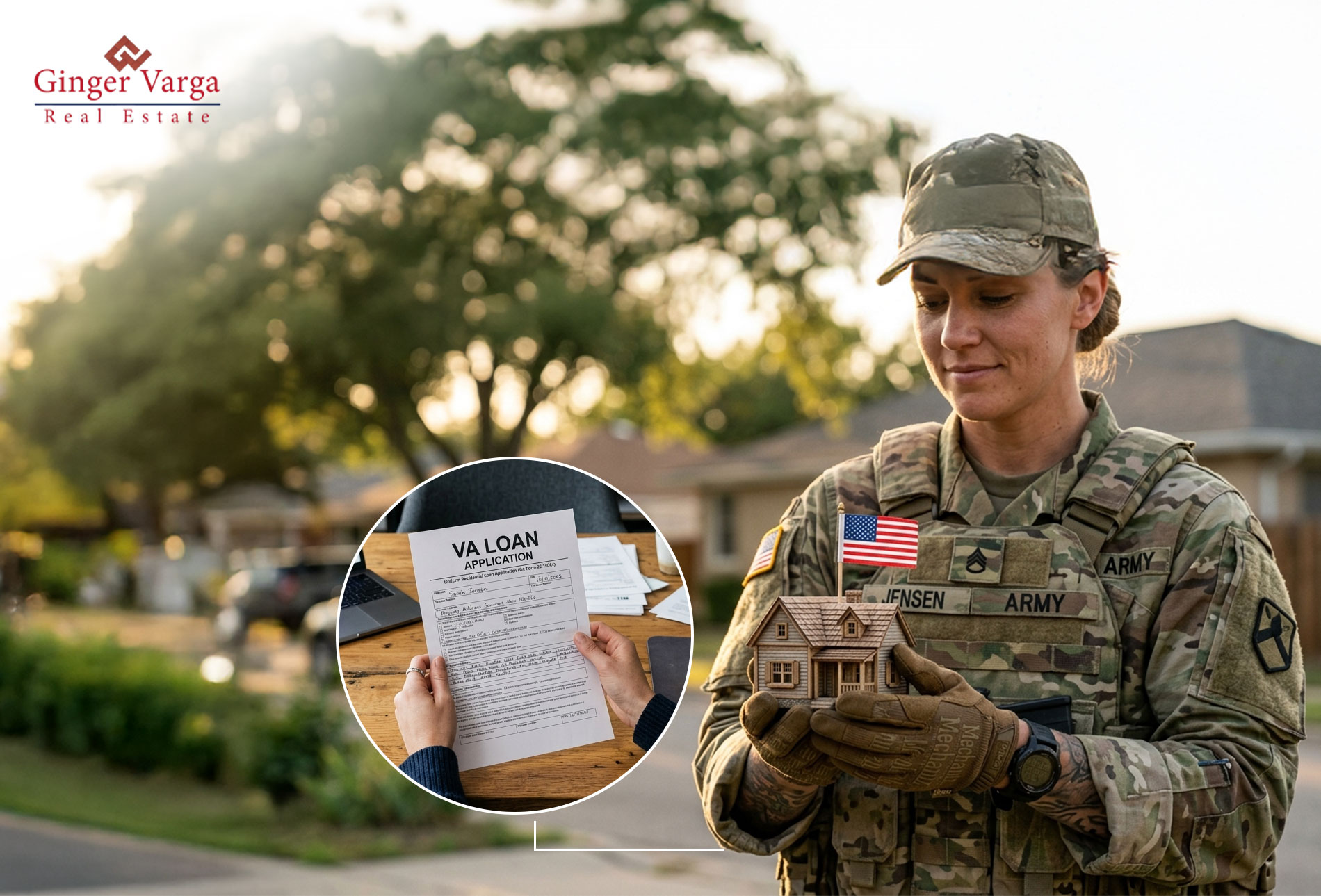
Can you close a VA loan while you are stationed overseas or deployed? The answer is yes!
The U.S. Department of Veterans Affairs allows service members to buy or refinance a home using a VA loan, even if they are not physically in the country.
With proper preparation and documentation, you can complete the closing process anywhere in the world.
The VA Assumable loan offers flexibility for active-duty service members. It includes lender-approved options that let you close the loan from anywhere. Each of these options is recognized by the VA and is used by the service members.
In this blog, we will explore the entire VA loan closing process for deployed members, the common ways to close a VA Loan overseas, and the rules governing Power of Attorney. We will further discuss the common challenges of closing a VA loan and the necessary steps to take before closing.
Start reading!
Understanding VA Loan Closings for Deployed Service Members
Managing a VA loan closing while stationed abroad or deployed may seem difficult, but the process is tailored to meet the specific requirements of military members.
The VA, like most lenders, understands that service members may not be able to participate in a conventional in-person closing. Thus, they have established processes to ensure you achieve your homeownership goals.
Power of Attorney (POA) Is Critical
A Power of Attorney (POA) is the essential instrument that enables VA loan closings for deployed service personnel. You grant them the authority to execute all essential documents on your behalf, designating a reliable individual as your attorney-in-fact.
The VA outlines specific criteria for the POA document to ensure your interests are fully safeguarded. It also ensures that your selected representative understands their duties.
Leverage Secure Digital Tools
The majority of lenders offer secure portals for document submission and electronic signature options.
These online tools enable you to review, authorize, and sign documents from anywhere in the world.
Stay On Top of Deadlines
Coordinate with your lender to monitor key deadlines and provide any additional documentation required due to your international status.
Choose a Military-Friendly Lender
Not every lender is well-versed in the VA loan procedures for active-duty service members. You must look for an expert lender who is knowledgeable about military borrowers to prevent avoidable delays or misunderstandings.
Can You Close a VA Loan While Deployed?
Yes, being deployed doesn’t stop you from finalizing a loan.
The VA Assumable loan program is tailored to support service members regardless of their duty location. It is even applicable for overseas or distant assignments.
The system offers flexibility, ensuring that your plans to buy a home will continue without interruption due to military obligations.
Common Ways to Close a VA Loan Overseas
Being deployed doesn’t mean you have to postpone your plans to buy a home. The VA loan program recognizes effective closing methods widely accepted worldwide.
There are three essential methods to finalize a VA loan abroad: a Power of Attorney (POA), Remote Online Notarization (RON), and a mail-away closing.
The VA fully approves every option and is frequently used by active service members. It is tailored to ensure your closing stays on schedule even if you are unable to attend in person.
Using a Power of Attorney (POA)
A Power of Attorney is the most commonly utilized approach for service members on deployment to finalize a VA loan.
It’s simple, entirely VA-sanctioned, and allows you to assign a trusted person to sign for you. It ensures the process continues even if you can’t attend in person.
What Is a Power of Attorney in a VA Loan Transaction?
- A Power of Attorney is a legal instrument that empowers another individual, known as your attorney-in-fact, to sign closing documents for you.
- In a VA loan transaction, this means that your appointed individual can examine, sign, and complete all documents at closing without your presence.
- The POA does not convey ownership of the loan or the property. It enables someone to represent you in this particular transaction.
- The POA must be sent to your lender for review and approval before the closing date. Avoid any delay until the last moment on this.
VA Requirements for an Acceptable Power of Attorney
- The Power of Attorney needs to be detailed. It must state the property address, the loan transaction, and the exact actions your attorney-in-fact is allowed to carry out.
- It should be durable and remain effective even if you lose the ability to act during implementation.
- The document must be properly signed and notarized. It is done at a U.S. Embassy, a military legal office (JAG), or by an authorized overseas notary.
- The POA must be provided to your lender in advance of closing. Most lenders ask for it at least a few days before the closing date.
- Some lenders impose extra internal criteria beyond VA standards. Thus, it is crucial to verify these early in the process.
Who Can Act as Your Power of Attorney?
- A trusted family member, such as a spouse, parent, adult child, or sibling, is the most common choice.
- A trusted personal friend who you believe will prioritize your financial well-being.
- A licensed real estate attorney is the safest choice, particularly for complex transactions.
- Whoever you decide on must be available on your closing date and willing to review legal documents. It must be someone who will follow your instructions without hesitation.
Remote Online Notarization (RON)
Remote Online Notarization is a modern, technology-driven solution that lets you sign and notarize your closing documents via a secure video call.
It helps you avoid the hassle of travel, courier services, or delays. If your lender permits it and your state enables it, this can be one of the quickest and most convenient methods to close the loan from abroad.
How Remote Closings Work?
- You connect with a certified notary via a secure, encrypted video platform from any location.
- Before the start of the session, your identity is confirmed online using a government-issued identification and knowledge-based verification questions.
- You examine, sign, and notarize all closing paperwork digitally in real time throughout the video session.
- The finalized documents are securely sent to your lender and title company right after the session.
- You need a dependable internet connection and a suitable device, such as a laptop, tablet, or smartphone.
States That Allow Online Notarization
- Most U.S. states currently allow Remote Online Notarization, but the regulations vary widely.
- RON availability depends on two factors: the regulations of the state where the property is located and whether your lender’s system is authorized to operate in that state.
- Even in states where RON is technically allowed, not all lenders possess the technology necessary to facilitate it. You must check with your lender promptly.
- If RON is not an option for your transaction, a POA or mail-away closing will be the next best choice.
Mail-Away Closings
A mail-away closing is one of the most conventional remote options and works effectively almost anywhere in the world.
You receive documents, sign them before a notary, and return them. It’s somewhat slower than the alternative methods, but it is dependable, familiar to lenders, and accessible in all states.
When This Method Is Used?
- When Remote Online Notarization is not allowed in the property’s state or isn’t accepted by your lender.
- When you’re stationed in a place with poor or inconsistent internet connectivity, making a live video becomes challenging.
- When you or your lender favors a conventional paper-based method.
- When other closing techniques fail, you need a reliable alternative.
Steps in a Mail-Away Closing Process
- Your Title Company or closing attorney assembles the complete closing package. Then they send it to your foreign address through an international courier service.
- Upon receiving the package, thoroughly examine all documents. If anything appears unclear or deviates from your quote, highlight it right away before signing.
- You complete all necessary paperwork in the presence of an authorized notary. It is accessible at U.S. Embassies, military JAG offices, or other recognized overseas notary services.
- Send the signed package back to the title company using a tracked overnight or international courier and retain your tracking number.
- The lender examines the submitted documents, verifies that everything is correct, and funds the loan.
- The title company files the deed with the local county, formally transferring ownership to you, usually within one to three business days after funding.
VA Loan Power of Attorney Rules You Should Know
Understanding the Power of Attorney (POA) rules for VA loans is crucial if you plan to close while deployed or overseas.
The VA has strict guidelines to ensure your interests are protected, and your loan process goes smoothly.
Understanding what’s required for a valid POA helps you avoid delays. Make sure your trusted representative is fully authorized to act on your behalf during closing.
Specific vs General Power of Attorney
In the early stages of purchasing a home, it is essential to confirm whether your prospective lender requires specific power-of-attorney documents.
Don’t automatically think that a general, all-purpose POA will be effective when you need to obtain home financing.
In many situations, a specific Power of Attorney is required, addressing one particular property, including a date, price range, and an address.
A general POA may not provide the necessary authorization to complete a VA loan closing. It is especially if it doesn’t reference the property or the nature of the transaction.
The agency mandates that lenders confirm that the veteran or service member is alive and not considered missing in action for VA loans.
Lenders must have the borrower’s written approval, which is logical, since the service member is ultimately responsible for the mortgage payments.
Make sure to clarify these questions with your loan officer or attorney before moving forward with a home purchase. Clarifying these details will help you avoid complications and delays in the process. It ensures a smooth, hassle-free closing during deployment.
Check: Texas Vet Loan vs VA Loan
Occupancy Certification Requirements
One requirement for VA financing is that the borrower must occupy the property. Usually, the borrower is required to reside in the home, but some provisions enable deployed borrowers to purchase a home and postpone their move-in.
Generally, the VA confirms that you have 60 days to take possession after your VA loan finalizes. You can still satisfy VA loan occupancy rules if you confirm that you will move into the home within 12 months after closing. A spouse or dependent child may reside in the home to fulfil crucial occupancy requirements.
While deployed, you are considered to have ‘temporary duty status,’ which permits you to fulfill the requirements. It also applies to active-duty service members who lack a spouse to occupy the property while deployed.
Common Challenges When Closing a VA Loan Overseas
Closing a VA loan from abroad is feasible, but it presents unique challenges that service members need to be ready to address.
Here are some of the common challenges you may face throughout the process:
- Time Zone Differences: Working with your lender, real estate agent, and additional parties can be challenging when you’re in another time zone. Arranging calls, signing papers on time, and replying promptly to inquiries can be more challenging when you’re several hours ahead or behind the U.S. time zone.
- Communication Delays: Problems with internet connectivity or restricted phone access hinder the overall progress. Deployment sites abroad might face limited or inconsistent communication options, complicating efforts to maintain the closing process effectively.
- Power of Attorney (POA) Missteps: If the POA documents are not prepared properly in accordance with VA guidelines, your representative might be unable to sign the papers or finalize the closing. Errors or missing information may result in considerable delays.
- Document Notarization: Some nations have restricted access to notary services or might not acknowledge U.S. notary standards. Notarizing documents abroad may need additional arrangements, frequently necessitating a visit to a U.S. embassy or consulate.
- Mail and Shipping Delays: If you have to sign hard copies and send them back to the U.S., international shipping may extend your timeline by days or even weeks. Certain unforeseen customs or mailing problems may also lead to delays.
- Lender Inexperience: Not every lender is aware of the intricacies involved in closing VA loans for service members on deployment. Collaborating with an inexperienced lender may lead to misunderstandings, mistakes, or added hassle.
Final Steps Before Closing a VA Loan While Overseas
Before finalizing a VA loan while abroad, there are crucial steps to take to ensure a smooth process.
Spending time examining documents, verifying funding, and understanding your final loan specifics will help prevent unexpected issues at the last minute.
Here we will discuss the final steps before you prepare for the VA loan closing process for military –
Reviewing Closing Documents in Advance
Before the closing, it is essential to thoroughly review all your paperwork. While staying abroad, you might not be able to correct errors promptly; thus, it is crucial to verify everything thoroughly.
- Request digital copies of all closing documents from your lender in advance.
- Review loan conditions, interest rates, charges, and payment timelines.
- Provide these documents to your attorney-in-fact or power of attorney to ensure they are completely informed.
- If you discover any errors or have any inquiries, reach out to your lender right away to address them before the closing date.
Confirming Funding and Recording
Verifying the method of fund transfers and documentation prevents unexpected issues at the last moment. International closings may require additional steps.
- Work with your lender to determine the method for wiring or transferring funds. It is particularly applicable if you are utilizing an international or U.S. account.
- Verify all wiring details and account numbers.
- Ensure you know how and when the property deed will be recorded with the local county office.
- Request written verification once your deed has been officially recorded and the VA loan is completed.
Receiving Your Final Closing Disclosure
Your lender must give you a Closing Disclosure at least 3 business days before closing. This document outlines all the details of your final loan.
- Examine the Closing Disclosure for accuracy, involving terms, expenses, and necessary payments.
- Request your lender to transmit it electronically and verify that you have received it.
- If something doesn’t align with your expectations, raise the concern immediately.
By following these measures and remaining proactive, you can ensure your overseas VA loan closes as seamlessly as possible.
VA Loan Overseas Closing Made Simple with Ginger Varga!
Closing a VA loan while deployed abroad is entirely feasible, owing to adaptable processes and lenders who are considerate of your specific requirements.
With proper planning and understanding of the VA loan closing procedure for military personnel, you can use the right Power of Attorney, and you can ensure your home purchase from anywhere in the world.
Whether you’re exploring VA loans for deployed military personnel or discovering VA loan closing options while overseas, it is crucial to be well-informed.
You must review the VA loan occupancy regulations and collaborate with a lender experienced in assisting military families. Following these steps will help you in preventing delays and facilitate a smoother transition to homeownership.
Are you ready to take the next step toward owning a home with a VA loan while deployed?
Ginger Varga is here to help you. Ginger focuses on helping Veterans, providing expert guidance throughout all phases of your real estate experience.
Contact her and secure your dream home even while you are deployed!
Can I Close a VA Loan While Deployed or Overseas: FAQ
Can I get a VA loan if I’m nearing the end of active-duty service?
Yes, you are eligible to apply for a VA loan if you are nearing the end of your active-duty service, provided you meet the minimum service requirements. You can present a valid Certificate of Eligibility (COE).
Lenders might ask for documentation indicating your commitment to ongoing service or evidence of re-enlistment. They may even require confirmation of steady income for loan approval.
Can I use a VA loan to buy an overseas property?
No, VA loans cannot be used to purchase property located outside the United States, its territories, or possessions.
The VA loan program is intended to help service members, veterans, and qualifying surviving spouses purchase, construct, or enhance a primary home in the U.S, Puerto Rico, Guam, the Virgin Islands, American Samoa, or the Northern Mariana Islands.
Can my spouse close the VA loan while I am overseas?
Yes, your partner can finalize the VA loan for you while you are abroad, provided they hold a Power of Attorney (POA) that meets VA requirements. This legal paper enables them to sign all required documents and finalize the transaction on your behalf. Ensure your lender checks and accepts your POA beforehand to avoid any delays.
How long does a remote VA loan closing take?
A remote VA loan closing usually takes about the same amount of time as a standard closing, generally 30 to 45 days from application to finalization.
However, remote or international closings might experience minor delays due to time zone differences, document delivery, or coordination with embassies or consulates for notarization.
Coordinating and ensuring transparent communication with your lender helps in keeping the schedule on target.
What happens to my house when I get deployed?
While you are stationed, your home remains your property. You can have a family member live in it, lease it, or keep it empty. If you possess a VA loan, you are required to keep making your mortgage payments as normal.
Make sure to update your contact details with your lender and consider setting up automatic payments to avoid missed payments while deployed.
Can I pause my mortgage while deployed overseas?
While you cannot pause your mortgage, the Service members’ Civil Relief Act (SCRA) provides you with certain protections.
The SCRA might permit you to seek a reduced interest rate (limited to 6%) and offers safeguards against foreclosure.
If you are experiencing financial difficulties due to deployment, reach out to your lender promptly to discuss possible solutions, such as forbearance or adjusted payment arrangements.